
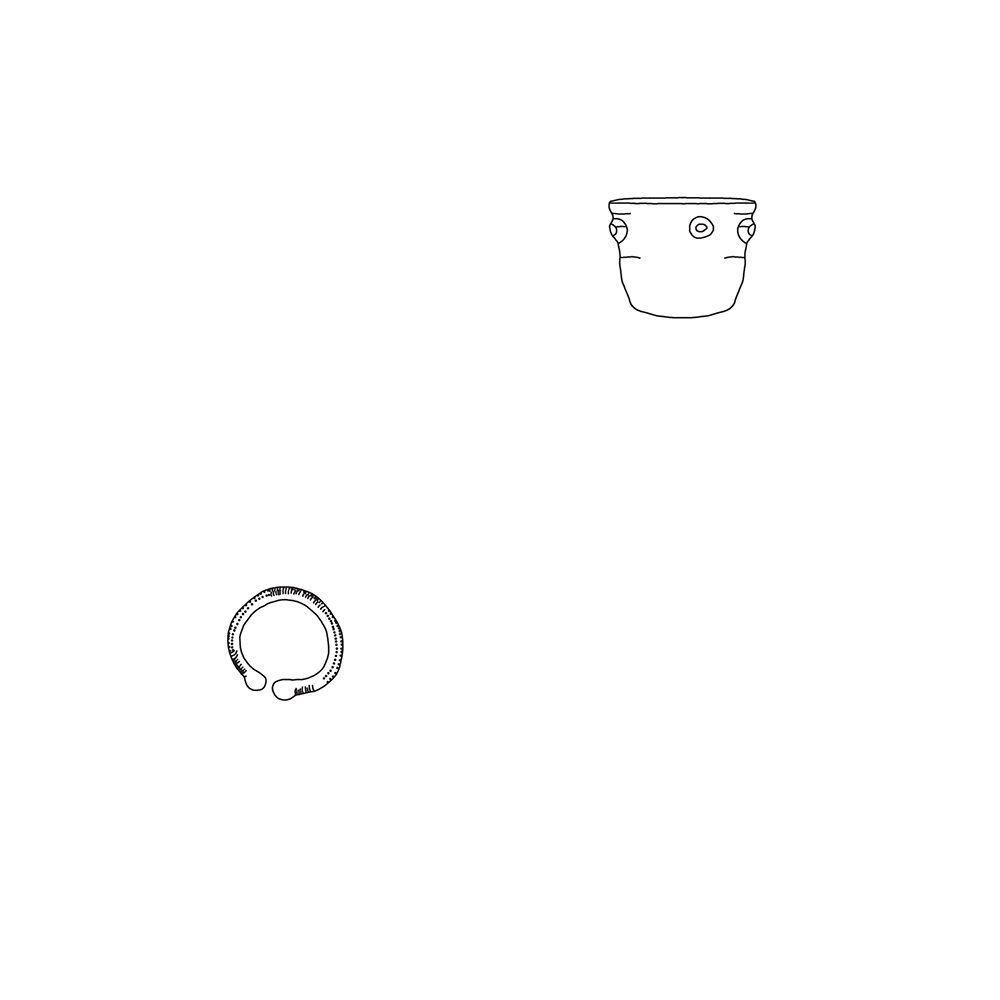
Cists are funerary structures typical of the Bronze Age. They are usually rectangular, sub-rectangular or trapezoidal in plan and are defined by four rectangular slabs placed on edge and used as pillars for a larger slab serving as a cover.
Their dimensions are variable, although the major axis rarely exceeds one metre in length.
The larger slabs are commonly braced by smaller ones (at the head and foot), and additional small stones or slabs are used to stabilise the structure and to level the surface supporting the large cover slab.
These structures reflect long-term funerary practices and may contain either inhumations or cremations. The grave generally contains ceramic vessels and occasionally lithic artefacts.
They are usually located near fertile valleys and, at times, within contemporaneous settlement areas.